Article: Angels in the Cemetery: Messengers, Mourners, and Guardians in Funerary Art
Angels in the Cemetery: Messengers, Mourners, and Guardians in Funerary Art
Across nineteenth-century cemeteries, angels appear as messengers, mourners, guardians, and guides—figures poised between the earthly world and whatever may lie beyond it.
Figures Between Two Worlds
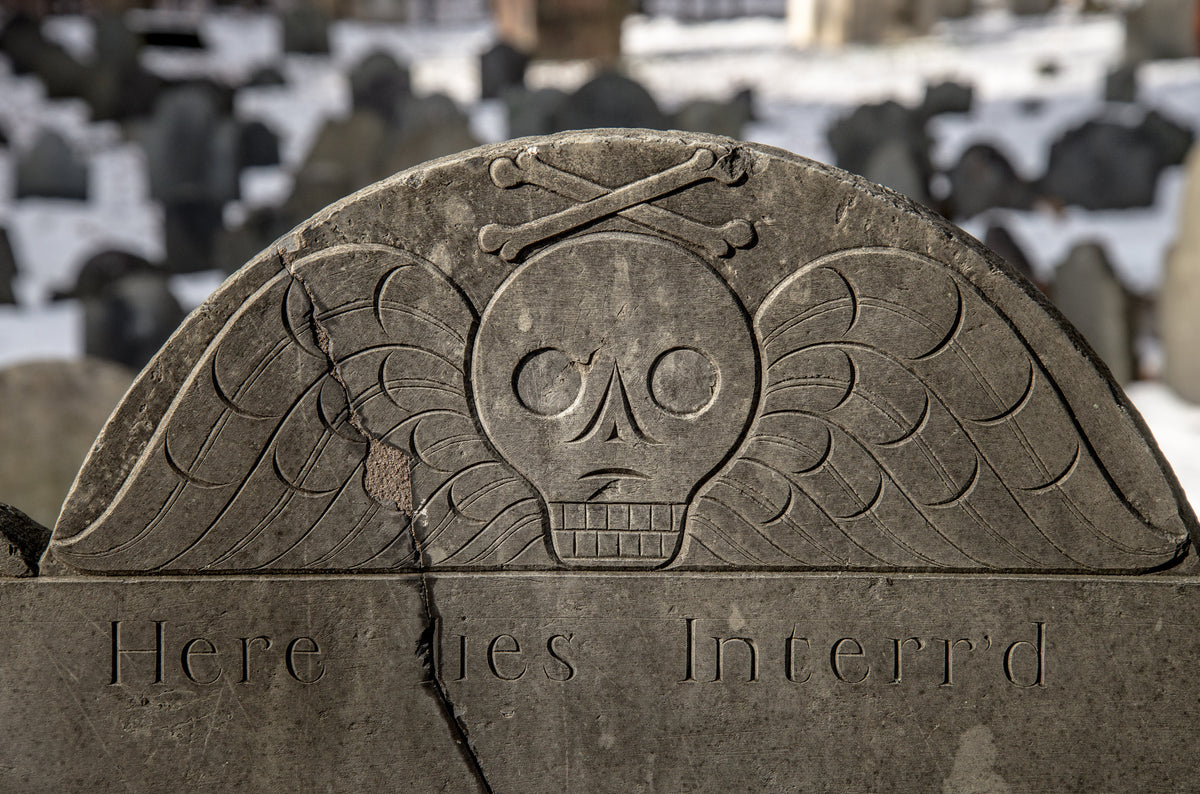
Walk through an historic cemetery and an angel may seem to be waiting for you: wings folded close, one hand raised toward heaven, or a face bowed in quiet grief. Unlike the stark death’s heads carved into many early New England gravestones, these figures do not confront the viewer with death’s physical certainty. They give sorrow a human form.
Angels have long served as intermediaries in Jewish and Christian traditions. The word itself comes through the Greek angelos, meaning messenger. In funerary art, however, an angel’s meaning is rarely contained in the wings alone. Gesture, expression, clothing, accompanying objects, and inscription all help shape the story a monument tells.
Messengers of the Divine
Some cemetery angels raise a hand or point upward, directing the mourner’s gaze toward heaven. The gesture can express faith in the soul’s ascent, divine judgment, or the promise of reunion beyond death. An angel holding a trumpet may allude to the Last Judgment and the resurrection of the dead.
These figures transform the monument into a moment of communication. The angel does not merely decorate the grave; it appears to announce, reveal, or direct attention toward a spiritual truth.
Guardians of the Grave
Other angels stand upright with wings extended or folded protectively around the monument. Their presence can suggest vigilance and safekeeping—a continuing watch over the dead and a reassuring presence for those left behind.
An angel shown beside a child’s grave may carry especially tender associations. Such monuments often emphasize innocence, heavenly care, and the hope that a young life has been received into paradise. Yet the meaning should always be read with care: the sculpture, inscription, and family history together provide a fuller interpretation than any symbol viewed in isolation.
The Mourning Angel
Perhaps the most emotionally immediate cemetery figure is the mourning angel. Seated or kneeling, with lowered head and downcast eyes, this angel mirrors the posture of the bereaved. Some lean against a cross, rest upon an urn, or hold flowers whose carved petals will never fade.
Rather than denying grief, the mourning angel gives it permanence and dignity. Stone becomes soft drapery, bowed shoulders, and a face held in eternal contemplation. The figure may embody the sorrow of the family, but it can also suggest compassion: grief is witnessed, shared, and held.
Angels as Guides
An angel reaching downward, extending a hand, or lifting a figure can suggest passage from earthly life into the next world. These images present death as a crossing rather than an abrupt end. The angel becomes a guide through an unknowable threshold.
In some monuments, this idea is strengthened by clouds, stars, rays of light, an open book, a cross, or flowers associated with memory and renewal. The complete composition matters. A pointing angel, a weeping angel, and an angel carrying a child may share wings, yet communicate very different emotional and theological messages.
Reading the Details
When encountering an angel in a cemetery, look beyond the figure’s general form. Ask:
- Is the angel standing, kneeling, seated, or in flight?
- Are the eyes raised toward heaven or lowered in mourning?
- Do the hands point, pray, beckon, protect, or hold an object?
- Is the figure accompanied by a cross, trumpet, book, wreath, flower, star, or urn?
- What does the inscription reveal about the person remembered?
These details help us move beyond a fixed dictionary of symbols. Funerary art is a language, but it is not always a simple code. Its meanings are shaped by religious belief, artistic convention, family intention, local practice, and the emotions of those who commissioned the monument.
Stone, Sorrow, and Hope
Cemetery angels remain compelling because they hold opposing ideas in balance. They are solemn yet comforting, earthly in human form yet marked by wings as beings of another realm. They can mourn beside us while also directing the eye upward.
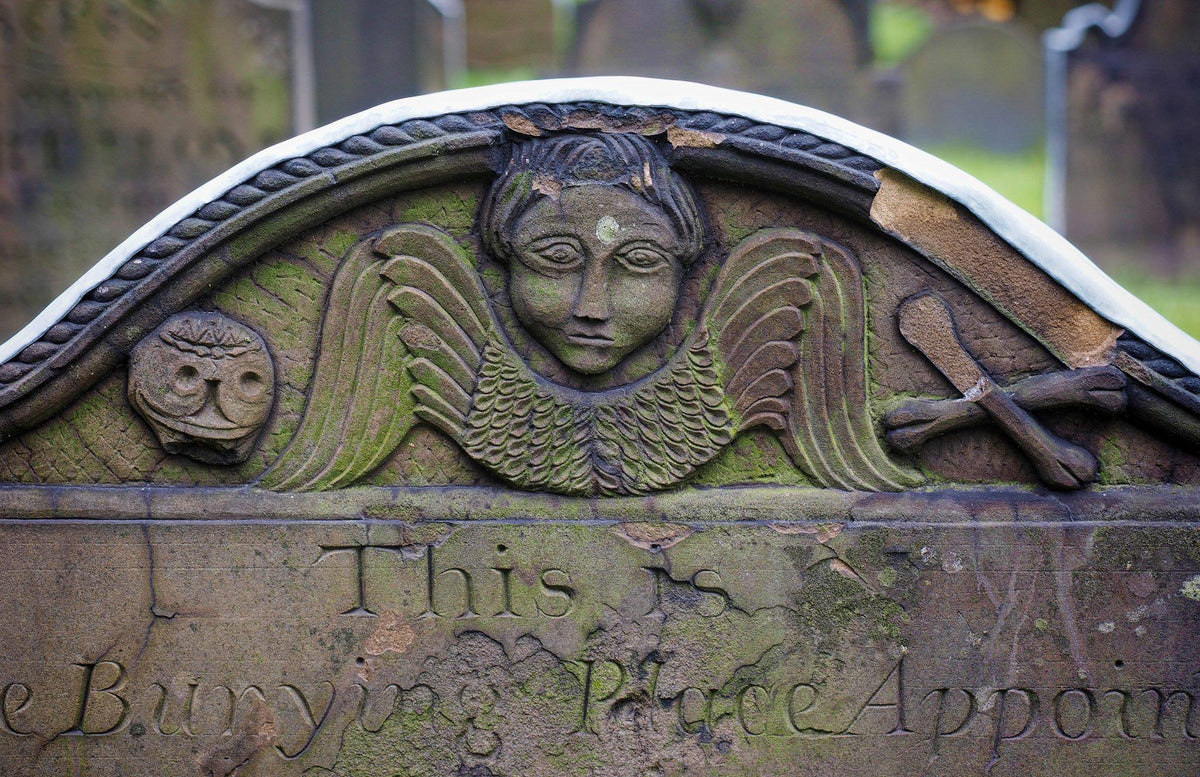
Among weathered stones and fading inscriptions, these figures preserve something deeply human: the desire to believe that love continues, that grief is seen, and that the dead do not make their final journey alone.

Written by Kelly Mann