Article: From Death’s Head to Willow and Urn
From Death’s Head to Willow and Urn
The Evolution of New England Gravestone Symbolism
Walk through an old New England burying ground and the stones begin to speak.
At first, their language appears mysterious: winged skulls stare from slate markers, solemn faces emerge between feathered wings, and graceful willows bend over classical urns. These images were not selected merely for decoration. They expressed changing ideas about death, the soul, mourning, and remembrance.
The transformation did not happen all at once, nor did one symbol immediately replace another. Older and newer motifs often appeared side by side. Taken together, however, they reveal a gradual shift—from the stark certainty of death toward the hope of resurrection and, eventually, the deeply personal experience of grief.
The Death’s Head: Remember That You Must Die
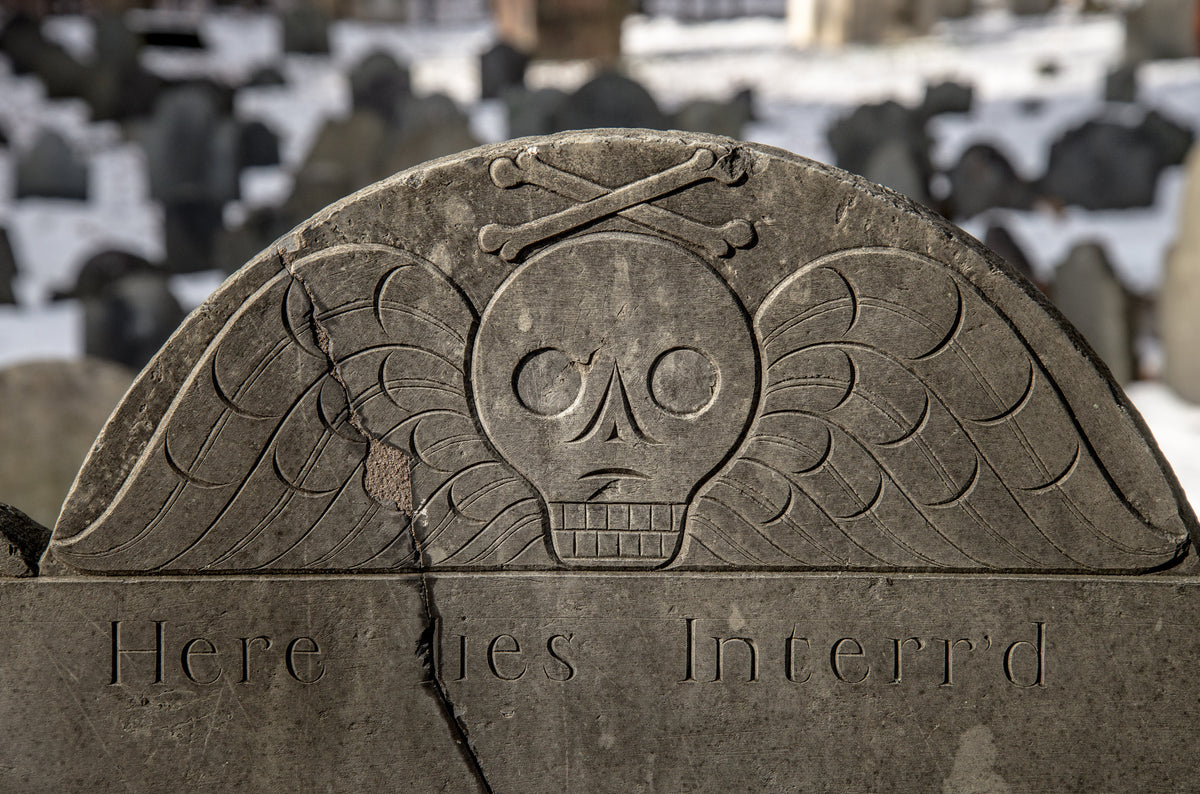
Among the most recognizable images on seventeenth- and early eighteenth-century New England gravestones is the death’s head: a stylized skull, often shown with wings.
To modern eyes, it can seem grim or even macabre. To early New England communities, however, the image served as a direct memento mori—a reminder that death was inevitable and that every person should prepare for it.
Puritan culture generally discouraged elaborate religious imagery. The death’s head offered an image that was forceful without portraying a saint, angel, or sacred figure. The skull represented mortality, while the wings suggested the soul’s passage beyond the body. Some examples are severe and skeletal; others have curling wings, intricate borders, crossed bones, hourglasses, or foliage carved around them.
These stones did not attempt to soften death. They confronted the visitor with it. Their message was not simply that the person named below had died, but that the reader would one day follow.
The Cherub: A Face Turned Toward Heaven
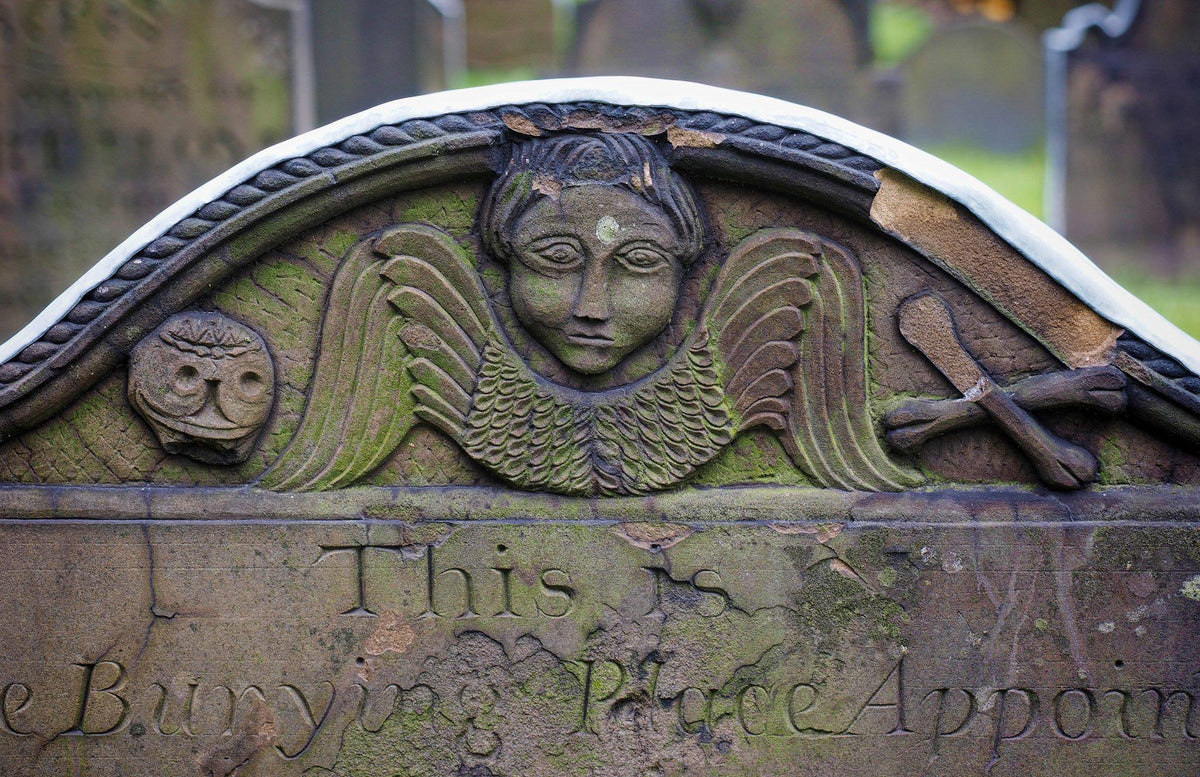
During the eighteenth century, another figure became increasingly common: the winged cherub, sometimes called a soul effigy.
Instead of an exposed skull, the central image became a rounded human face framed by wings. The expression might appear solemn, serene, or faintly smiling. The imagery retained a connection to mortality and the departing soul, but its emotional tone was gentler.
This change reflected broader shifts in religious thought and visual culture. The emphasis moved away from the physical evidence of death and toward spiritual resurrection and heavenly existence. Yet the transition was not orderly. As research into Boston’s historic burying grounds demonstrates, death’s heads and cherubs coexisted for many years. Individual carvers maintained their own styles, and families continued to choose older motifs even as newer ones became fashionable.
The cherub therefore did not erase the death’s head. Instead, it offered another way to imagine what came after death: not only the decay of the body, but the continuation of the soul.
The Urn and Willow: Mourning Becomes Personal
By the late eighteenth and early nineteenth centuries, the urn-and-willow motif had begun to appear across New England.
The urn drew upon the art and architecture of the ancient world. Although cremation was not the customary practice in early America, the classical urn had long served as an emblem of death. Beside it, the weeping willow embodied sorrow through its bowed branches and cascading leaves.
Together, these symbols created a markedly different mood. The death’s head warned. The cherub reassured. The urn and willow mourned.
Their popularity coincided with renewed interest in classical art and with changing attitudes toward emotion, memory, and loss. Gravestones increasingly became monuments not only to mortality or salvation, but to the individual who had died and the people left behind.
The language of inscriptions changed as well. Brief declarations of death gradually shared space with affectionate epitaphs, poetic verses, and expressions of personal grief. The grave marker became a place where sorrow could be made visible.
A Changing Landscape of Memory
These carved motifs also reflect a transformation in the burial landscape itself.
Early burying grounds were often practical communal spaces with closely arranged stones. During the nineteenth century, the rural cemetery movement introduced landscaped grounds, winding paths, ornamental plantings, and monuments intended for contemplation. Cemeteries became places where families might walk, remember, and commune with the past.
The visual language expanded accordingly. Willows and urns were joined by clasped hands, broken columns, flowers, books, lambs, anchors, and angels. Each symbol offered a vocabulary through which faith, identity, virtue, occupation, age, or grief might be expressed.
Yet symbols should be interpreted with care. Their meanings were shaped by period, place, denomination, the preferences of a family, and the habits of individual stonecarvers. A motif may suggest a widely understood idea, but no symbol functions as a perfect code with only one meaning.
Reading the Stones
The next time you enter an old New England burial ground, begin by looking at the faces above the inscriptions.
Is the image skeletal or human? Are the wings sharp and geometric, or soft and feathered? Does a willow bend toward an urn? Look at the neighboring stones and their dates. You may be able to watch the artistic and spiritual vocabulary of an entire community change from one generation to the next.
These stones are more than records of names and dates. They are small works of art, shaped by belief and grief. Through skull, cherub, willow, and urn, the dead still tell us how the living understood mortality—and how they hoped to be remembered.
A Note for Cemetery Visitors
Historic gravestones are fragile works of art. Please do not touch, lean against, make rubbings of, clean, or attempt to repair them. Photograph markers respectfully, remain on established paths where requested, and follow the rules of each burial ground.
Further Reading
- City of Boston, “Iconography of Gravestones at Burying Grounds”
- Edwin Dethlefsen and James Deetz, “Death’s Heads, Cherubs, and Willow Trees: Experimental Archaeology in Colonial Cemeteries”
- U.S. National Park Service, “Echoes Written in Stone”

Written by Kelly Mann